


Ransomware Exposure Driven by Technical Debt
In critical infrastructure, healthcare, manufacturing, and defense industrial base sectors, operational continuity is non-negotiable. However, many core industrial control systems (ICS), specialized medical devices, and factory floor machinery rely on legacy Windows systems, frequently running unsupported operating systems such as Windows 7 or older. Operators often prioritize 24/7 uptime, avoiding disruptive patching or replacement for fear of instability, accumulating immense technical debt.
This deferred maintenance translates directly into catastrophic ransomware risk, with targeted incidents rising by 20% year-over-year. For organizations with these complex, legacy IT infrastructures, device disruption after an attack is significantly higher. The true financial danger is not the average $2.73 million ransom payment, but the unplanned operational halt. Following an incident, organizations face an average downtime of 21 days, costing between $14,000 and $23,750 every minute the systems remain offline. In addition to the cost from the disruption in operations, tangible and intangible impacts such as Brand reputation and Trust result in additional loss of revenue, turning a technical flaw into an existential business and public safety risk.
The Failure of Traditional, Kernel-Dependent Defense
The catastrophic risk posed by legacy systems is best exemplified by the 2017 WannaCry global outbreak. This wormable attack leveraged unpatched vulnerabilities, specifically the EternalBlue exploit, to spread across networks and compromise critical services, famously crippling the U.K.’s National Health Service (NHS). WannaCry proved that a lack of patching on older operating systems creates a viable entry point for massive, disruptive attacks.
Traditional security measures, such as antivirus (AV), EDR, and other existing detection tools, fail in this environment because they are architecturally dependent on the host Operating System (OS) kernel. The kernel is the core interface between software and hardware. If an attacker successfully exploits a known vulnerability in that legacy Windows OS (e.g., using a kernel exploit), they gain high privilege access. Once the attacker controls the OS core, they can effectively neutralize or bypass any security agent operating within that compromised environment. For security to be robust on an unpatchable system, the defense layer must be logically and architecturally separated from the vulnerable OS core itself.
Arms Cyber: Kernel-Independent Resilience
Arms Cyber’s solution is engineered specifically to address the security paradox of legacy systems by establishing a non-disruptive, resilient defense boundary. Our core mechanism is an architecturally isolated security agent that requires zero modification to the host OS, eliminating the stability risks associated with patching or reboots.
To maintain integrity and guarantee enforcement, the agent operates outside the vulnerable Windows kernel environment. The easiest way to conceptualize this architectural integrity for the non-technical reader is to think of the agent as a security guard operating from inside a locked, virtual booth. Even if an intruder (ransomware) successfully bypasses the main OS security perimeter, the isolated agent cannot be tampered with or disabled and retains its full capability to mediate resource access and enforce security policy.
This architectural resilience is paired with Behavioral Threat Detection (BTD). Traditional security relies on matching known signatures (what the malware is), a useless endeavor against evolving or zero-day ransomware. BTD, however, which in our solution is differentiated by running from this same architecturally isolated position, monitors the system for deviations from established normal patterns, identifying malicious activity based on what it does, such as unauthorized process injection, sudden spikes in data access, or illegal encryption attempts, even if the malware strain is brand new and unknown. This provides robust evasion resistance, ensuring that protection is maintained regardless of the legacy OS’s outdated threat intelligence.
| Security Mechanism | Traditional Kernel-Dependent AV | Arms Cyber: Kernel-Independent Agent |
| Deployment Method | Requires OS patches and kernel modifications. High stability risk on legacy OT systems | Zero modification to the host OS or kernel; non-disruptive plug-and-play architecture. |
| Exposure Risk | Operates within the OS security model; easily disabled by kernel exploits. | Operates from an isolated, external security boundary (similar to a locked booth). |
| Detection Principle | Relies on known threat signatures (poor zero-day defense). | Relies on monitoring system behavior and anomalies (effective against novel and evasive ransomware). |
Quantifiable Value and Compliance Assurance
Deploying Arms Cyber is a strategic investment that transfers the risk of catastrophic operational failure and provides immediate regulatory advantages.
Operational Resilience: By maintaining continuous defense against wormable threats that leverage known flaws, Arms Cyber prevents the average 21-day unplanned outage. Avoiding this catastrophic downtime saves organizations potentially millions of dollars in recovery costs and ensures the stability of critical industrial or medical processes where systems cannot afford to fail.
Compliance Solution: For organizations subject to stringent compliance frameworks like CMMC 2.0 or NIST 800-171, legacy OT and ICS are often designated as “specialized assets” that cannot meet standard security requirements for patching or multi-factor authentication. Arms Cyber transforms these vulnerable assets into an auditable compliance enclave. The physical appliance isolates, monitors, and encrypts traffic, providing the auditable logging, asset inventory, and policy enforcement required by regulators without necessitating costly VLAN redesigns or operational disruption. This capability allows organizations to safeguard operational continuity while satisfying urgent regulatory mandates.
Next Steps: A Path to Resilience
Protecting vital, aging infrastructure demands a modern, architectural defense that circumvents the built-in limitations of the host operating system. The Arms Cyber architecturally isolated agent ensures the highest level of security integrity and defense against the newest behavioral threats, guaranteeing that organizations can continue operations even when forced to use unpatchable systems.
If your organization recognizes the risk associated with translating technical debt into a 21-day unplanned outage and requires a demonstrable, non-disruptive path to securing your legacy specialized assets, connect with our team.
Request a No-Disruption Risk Assessment and technical briefing today.
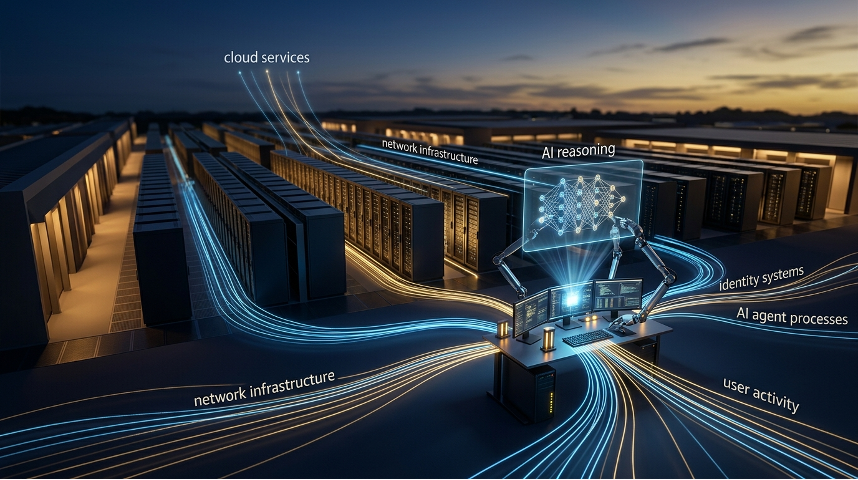
The cybersecurity industry is in the middle of a transformation that will be as consequential as the shift from signature-based...

New AI-driven capability automatically discovers what data should be hidden and enforces protection policies at scale with...
Next week, roughly 44,000 cybersecurity professionals will descend on San Francisco’s Moscone Center for RSAC 2026...
Arms Cyber’s lightweight, passive agent helps protect legacy systems in manufacturing, healthcare, utilities, and other...

To connect now, contact: [email protected].